The moment you stop trying to “fix” an uncomfortable feeling and instead turn toward it with curiosity, something surprising can happen: the feeling begins to speak. Not in words you force, but in images, moods, bodily sensations, and sudden associations that feel oddly alive. Many of us are trained to either suppress these inner movements or analyze them from a distance. Active imagination offers a third option: a structured, respectful way to meet the psyche where it naturally communicates—through symbol, story, and emotion—without getting swept away by it.
Thesis: Active imagination is a deliberate practice for dialoguing with inner images and emotions so they can be understood, integrated, and transformed; when approached with clear boundaries and safety guidelines, it can be a gentle, beginner-friendly method of shadow work and self-reflection.
WHAT ACTIVE IMAGINATION IS (AND ISN’T)
In Jungian psychology, active imagination is a method of engaging the unconscious consciously. You don’t “make up” a fantasy to entertain yourself, and you don’t passively drift into a daydream. Instead, you enter an imaginal space on purpose, invite an inner image or feeling to take form, and then relate to it—often through conversation, drawing, writing, or movement.
It helps to clarify what it isn’t:
It isn’t the same as meditation that aims to empty the mind. In active imagination, content is welcome—images, characters, scenes, sensations.
It isn’t a replacement for therapy, especially if you’re dealing with trauma, dissociation, or severe anxiety. It can complement therapy, but it’s not a do-it-alone solution for everything.
It isn’t “manifestation” or trying to force the psyche to give you what you want. The attitude is more like listening than commanding.
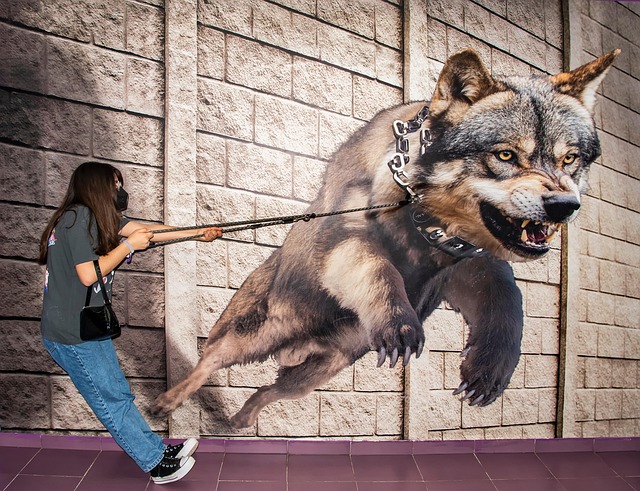
It isn’t about taking every image literally. A snarling dog doesn’t necessarily mean “danger outside.” It may represent a protective instinct, anger, fear, or something else entirely. Symbols are personal before they are universal.
At its best, active imagination is a relationship-building practice. You’re learning to relate to parts of yourself you may have exiled, ignored, idealized, or feared.
WHY IT WORKS: THE PSYCHE SPEAKS IN IMAGES
We often try to solve inner conflicts with the same mindset that created them: willpower, logic, productivity, or avoidance. But the unconscious doesn’t primarily speak in bullet points. It speaks in metaphor, mood, and narrative.
If you’ve ever had a dream that left a strong emotional residue—unease, relief, longing—you already know the psyche can communicate powerfully without giving you a neat explanation. Active imagination is like stepping back into that dream-language while awake, with one crucial difference: you can respond.
That response is the heart of the method. You’re not just observing inner content; you’re engaging it. Over time, this can soften rigid self-concepts (“I’m always the responsible one”), reveal hidden needs (“I’m exhausted and resentful”), and loosen inner polarities (“part of me wants closeness, part of me expects betrayal”).
WHO SHOULD BE CAUTIOUS (SAFETY FIRST)
Beginner-friendly doesn’t mean risk-free. Any practice that opens the door to the unconscious deserves respect.
Consider extra caution or professional support if you:
- Have a history of psychosis, mania, or severe dissociation
- Are in an acute crisis (panic spirals, suicidal ideation, severe insomnia)
- Have unprocessed trauma that easily floods you with flashbacks
- Find that imagery practices quickly make you feel unreal, detached, or out of control
If any of those fit, it doesn’t mean “never.” It means “not alone, not yet, or not this way.” You can start with grounding practices, body-based regulation, or guided support and return to imaginal work later.
Even without those risk factors, use basic safeguards: Keep sessions short (5–15 minutes at first). Do it when you’re relatively stable, not in the middle of a fight or at 2 a.m. Have a clear start and stop. Ground afterward (water, food, a walk, a shower). Write down what happened so it doesn’t blur into rumination.
A helpful rule: if you feel pulled into compulsive repetition—trying to “get the right answer” or forcing the image to change—pause. Active imagination is a dialogue, not a wrestling match.
THE BASIC METHOD: A SIMPLE, SAFE CONTAINER
You can think of active imagination as four phases: prepare, invite, engage, close.
PREPARE (1–2 minutes) Sit comfortably. Feel your feet. Notice your breath without forcing it. Name where you are: “I’m in my room. It’s Tuesday. I’m safe enough right now.” This orientation matters more than it sounds. It tells the nervous system: we’re here, and we’re choosing this.
INVITE (1–2 minutes) Pick one entry point: A mood (irritation, dread, loneliness) A body sensation (tight chest, heavy shoulders) A dream fragment (a hallway, a stranger, a wave) A recurring thought (“I’m failing,” “they’ll leave”)
Then ask a gentle question: “If this feeling had an image, what would it be?” Don’t strain. Wait. Sometimes nothing comes; that’s fine. You can end the session or simply stay with the sensation.
ENGAGE (5–10 minutes) When an image or character appears, relate to it. You can: Ask: “Who are you?” “What do you want?” “What are you protecting?” “What are you afraid would happen if you stopped?” Respond honestly. If you’re angry, say so. If you’re confused, say so. Negotiate boundaries: “I can listen for ten minutes, but I won’t harm myself or anyone.” (Yes, you can say this internally.) Let the figure respond in its own voice. The key is not to script it. You’re allowing a spontaneous reply.
CLOSE (1–3 minutes) This is essential. Thank the image. Tell it you’re ending for now: “We’ll continue another time.” Then intentionally return to the room. Feel your hands. Open your eyes if they were closed. Write a few notes: what happened, what you felt, what surprised you.
If you skip closure, the material can leak into the day as rumination, irritability, or a vague sense of being “haunted.” Closure is the psychological equivalent of washing your hands after working in the garden.
GENTLE ENTRY POINTS FOR BEGINNERS
If “talking to inner figures” sounds too strange, start smaller. Here are a few softer doorways:
Dialoguing with a feeling as a feeling Instead of forcing an image, ask the emotion directly: “Anger, what are you trying to do for me?” Then write the answer that comes, even if it’s blunt: “I’m trying to stop you from being used.” That alone can shift your relationship to it.
Using a place rather than a person Some people find characters intense. Try imagining a safe room, a forest clearing, a shoreline. Ask: “What shows up here?” Places can hold emotion without the pressure of a face-to-face confrontation.
Creative response instead of conversation After a brief imaginal moment, draw a rough sketch, pick a color that matches the mood, or write a short paragraph. The psyche often responds well to symbolic reciprocity: you gave it attention, you gave it form.
A SHORT ANECDOTE: MEETING THE “INNER CRITIC” DIFFERENTLY
Imagine someone who sits down to do active imagination because they’re stuck in self-judgment. The inner critic is relentless: “You’re behind. You’re lazy. You’ll never follow through.”
They close their eyes, orient to the room, and invite the feeling of judgment to take an image. A figure appears: a stern school administrator with a clipboard. The person’s first impulse is to argue, but instead they ask, “What’s your job?”
The figure says, “If I stop, you’ll become unbearable. You’ll disappoint everyone. You’ll be rejected.”
That’s a different conversation than “go away.” Now the person sees the critic as a frightened protector, not just an enemy. They respond: “I hear you. You’re trying to prevent rejection. But your methods are crushing me. Can we try something else?”
The figure hesitates, then says, “Prove you can be consistent without me yelling.”
That becomes the real work: building trust inside. Not by silencing the critic, but by showing it new evidence. In Jungian terms, this is the beginning of integration: the part is no longer split off and demonized; it’s related to.
WHAT TO DO WITH WHAT YOU LEARN: INTEGRATION OVER INTERPRETATION
Beginners often want to decode the image immediately: “What does it mean?” Sometimes meaning comes later. A more useful first question is: “What does this ask of me?”
If you meet a scared child-part, the ask might be rest, gentleness, protection, play. If you meet a raging animal, the ask might be honest boundaries, assertiveness, or grief that needs expression. If you meet a seductive figure, the ask might be vitality, creativity, or a warning about escapism.
Integration is usually behavioral and relational, not just intellectual. You don’t “solve” an inner figure by understanding it. You build a new relationship with it over time.
A simple integration practice: after each session, choose one small action that honors what you learned. Something modest and real. A difficult conversation. A boundary. A nap. A walk without your phone. A creative hour. The psyche trusts actions more than insights.
COMMON PITFALLS (AND HOW TO AVOID THEM)
One pitfall is turning active imagination into entertainment. If every session becomes an elaborate fantasy epic, ask whether you’re avoiding the uncomfortable edge where real emotion lives. The practice should feel alive, not merely clever.
Another pitfall is using it to self-attack. If the inner figures become abusive and you leave feeling worse, slow down. Shorten sessions. Add grounding. Consider working with a therapist. You’re allowed to set limits with inner content.
A third pitfall is treating inner images as external commands. If an image says, “Quit your job tomorrow,” don’t obey automatically. Active imagination offers psychological truth, not necessarily literal instructions. Bring the material to reflection: “What part of me wants freedom? What part is exhausted? What would a wise, gradual change look like?”
CONCLUDING TAKEAWAY
Active imagination is a way of meeting your inner life with dignity: not suppressing it, not being possessed by it, but relating to it. Start small, keep it bounded, and prioritize safety and closure. Over time, this practice can become a reliable bridge between your conscious intentions and the deeper currents that shape your choices, relationships, and sense of meaning.