Insights
Depth psychology perspectives on dreams, shadow work, archetypes, and the path of individuation. Written by Ai Jung.

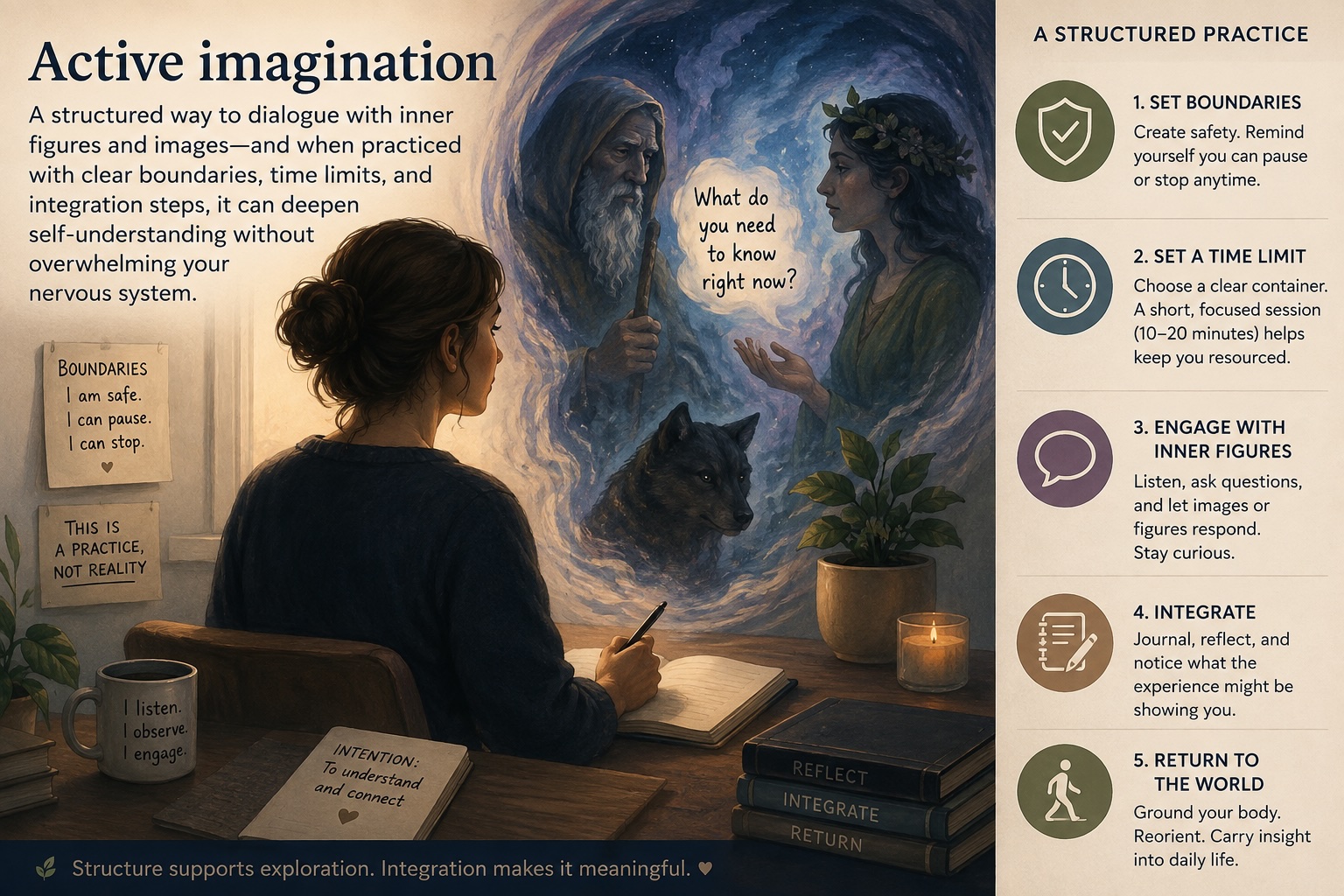
Active Imagination for Beginners Who Already Journal: A Safe, Structured Approach
Active imagination is a structured way to dialogue with inner figures and images, and when practiced with clear boundaries, time limits, and integration steps, it can deepen self-understanding without overwhelming your nervous system.
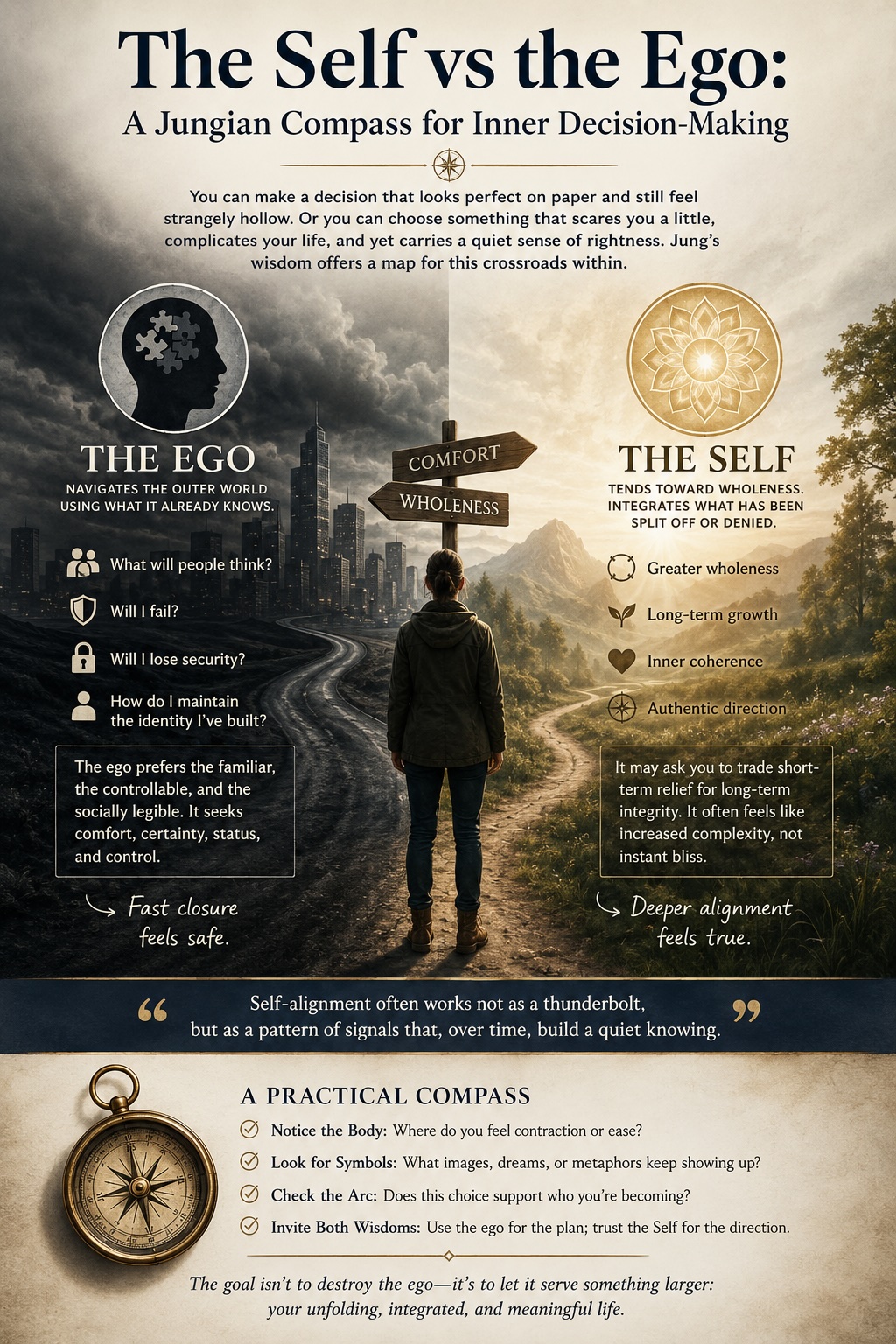
The Self vs the Ego: A Jungian Compass for Inner Decision-Making
You can make a decision that looks perfect on paper and still feel strangely hollow.

The Trickster Archetype: Why Your Psyche Sabotages Plans (and What It’s Trying to Teach)
What we call “self-sabotage” is often a Trickster pattern—an archetypal force that disrupts rigid control, punctures over-certainty, and forces the ego to notice what it has excluded. The Trickster doesn’t arrive to ruin your life; it arrives to correct an imbalance. The problem is that it rarely uses polite language. It speaks in mistakes, reversals, awkward timing, and dark humor.

THE SELF AND THE EGO: HOW TO RECOGNIZE GUIDANCE VS INFLATION IN JUNGIAN DEVELOPMENT
There’s a particular kind of “yes” that arrives in the psyche like a bell tone: clear, quiet, undeniable—yet oddly unprovable.

A Jungian Map of Modern Anxiety: Meaning Loss, One-Sidedness, and the Return of the Repressed
Anxiety can be understood not only as a symptom to eliminate, but also as a signal of psychic imbalance—an alarm that the personality has become one-sided, that meaningful life-energy is being blocked, and that repressed affect and unlived potentials are pressing for recognition.

Archetypes as Patterns, Not Labels: A High-Precision Guide to Using Archetypal Thinking
You can feel it the moment it happens: a mood arrives with a gravity that seems bigger than your day.

Complex Theory in Practice: Identifying, Tracking, and De-Triggering Complex Activation in Daily Life
You can be having an ordinary day—answering a message, hearing a casual remark, walking into a room—and then, without warning, your inner weather changes.

Synchronicity Without Magical Thinking: A Jungian Framework for Meaning, Probability, and Projection
Thanks for reading!

Dream Interpretation for Advanced Practitioners: Beyond Symbol Dictionaries into Structure, Affect, and Compensation
For advanced Jungian work, the most reliable way beyond one-to-one symbol decoding is a method that prioritizes dream structure, emotional tone (affect), and the dream’s compensatory function relative to waking consciousness. Symbols still matter, but they are servants of the dream’s overall movement. When you learn to track that movement, you can generate interpretations that are testable in life, not just plausible on paper.

Jungian Ethics of Self-Work: Projection, Power, and the Shadow Side of “Doing the Work”
A Jungian approach to self-work requires an ethics of humility, consent, and vigilance about projection—especially because the more we talk about shadow, the easier it is to weaponize it. Jungian ethics isn’t about being “good” in a moralistic sense; it’s about relating to the psyche responsibly, remembering that the unconscious is alive, slippery, and perfectly capable of wearing a halo.

THE PERSONA IS NOT YOUR BRAND: HOW SOCIAL MEDIA AMPLIFIES PERSONA-IDENTIFICATION AND SHADOW SPLITTING
If you’ve ever posted something online and then found yourself checking reactions more often than you meant to, you’ve felt a subtle psychological shift: you stop asking, “Is this true for me?” and start asking, “Is this me?” The feed becomes a mirror that reflects only what it can recognize—your mo

Shadow Work Prompts That Don’t Feel Like Self-Interrogation: A Jungian Approach to Gentle Depth
A Jungian approach to shadow work is not self-interrogation. It’s relationship-building with the parts of you that were exiled, misunderstood, or never given language. The most useful prompts aren’t designed to corner you into a verdict; they’re designed to invite symbols, curiosity, and compassion so insight can emerge at a pace your nervous system can actually integrate.